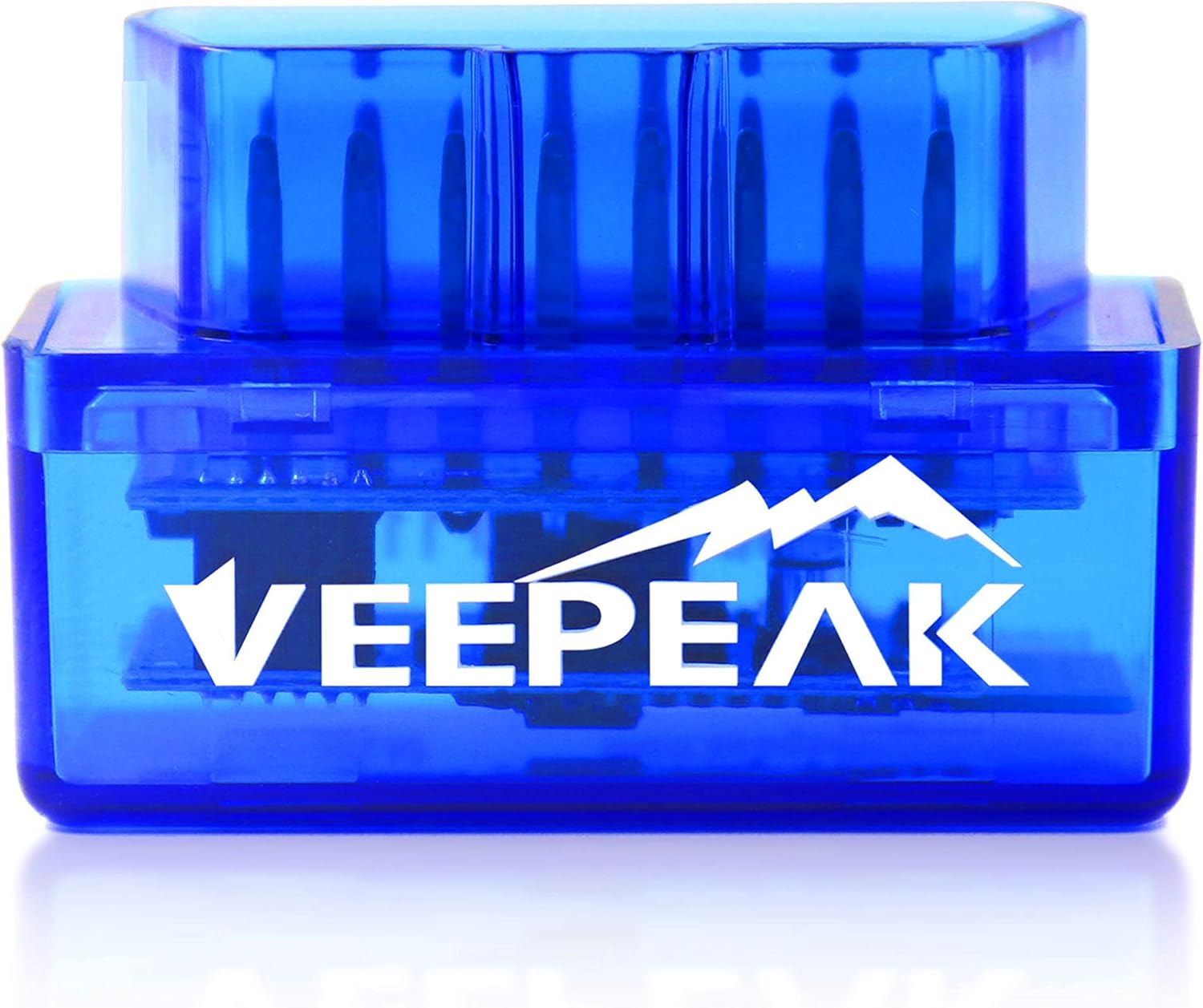
- Bluetooth 5.1: pairs inside the app
- iPhone and Android
- Torque, Car Scanner, OBD Fusion
The one mini that skips Bluetooth altogether: it broadcasts its own WiFi_OBDII network, so an iPhone, an old Android tablet or a Windows laptop can all connect with the same settings.
This mini carries no Bluetooth radio at all. It creates its own small Wi-Fi network called WiFi_OBDII, and whatever joins that network can talk to the car. That sidesteps the whole Classic-versus-LE question, because every iPhone, Android phone and Windows laptop speaks Wi-Fi.
The maker names iPhone, iPad and iPod on the Apple side, Android from version 4.0, and Windows. Old devices are the quiet winners: a drawer tablet with patchy Bluetooth support still joins a Wi-Fi network without complaint, and a laptop can run full PC OBD programs from the passenger seat.
The basic routine:
Where the Wi-Fi mini makes sense:
The weight is 15 g, the shell is compact, and power comes from the port, with no battery or switch. The wider iPhone picture, with the Bluetooth LE minis alongside, is in the ELM327 mini iPhone notes.
| Spec | Value |
|---|---|
| Connection | Wi-Fi only, no Bluetooth |
| Network name | WiFi_OBDII |
| Wi-Fi password | None |
| IP address and port | 192.168.0.10, port 35000 (most units) |
| Devices | iPhone, iPad, iPod; Android 4.0+; Windows |
| iOS apps | OBD Fusion, DashCommand, OBD Car Doctor |
| Android apps | Torque Lite and Pro, OBD Car Doctor, Car Scanner, OBD Fusion, DashCommand, EOBD Facile, Dr. Prius |
| Windows apps | OBD Auto Doctor, EOBD Facile, Car Scanner |
| Protocols named | ISO 9141-2, ISO 14230-4 KWP (5-baud and fast init), ISO 15765-4 CAN (11/29-bit, 500/250 kbaud), SAE J1939, USER1 and USER2 CAN |
| Vehicle years | US 1996+, Canada 1998+, EU petrol 2001+, Mexico and Australia 2006+, Brazil 2008+, India and Japan 2010+ |
| Diesel | Not supported (maker's note) |
| Hybrid / EV | May not be supported |
| Functions | Read generic and manufacturer-specific codes with meanings, clear codes, turn off the MIL |
| Code library | Over 3,000 generic definitions |
| Auto sleep | After 30 minutes without communication |
| Power | From the OBD-II port, no battery |
| Weight | 15 g |
| In the box | Wi-Fi OBD2 scanner; app QR code on the package |
| Guarantee | 3 months |
Joining the WiFi_OBDII network is only half the setup. The app also needs to know where on that network the dongle sits, and for most units the dongle sits at 192.168.0.10, listening on port 35000. Get those two numbers into the app once and every later connection is a single tap.
The Car Scanner steps, which the maker's own instructions follow:
Other apps ask for the same two numbers, usually under a Wi-Fi or TCP connection setting. The maker's app suggestions by platform:
Once saved, the settings stick. Next time, join WiFi_OBDII, open the app and tap Connect; nothing else needs entering unless the app is reinstalled.
A QR code on the back of the package links to app downloads. Each app's connection menu gets its own walkthrough in the app setup notes.
Wi-Fi brings one habit to learn. While the phone is on WiFi_OBDII, it is connected to a network with no internet behind it. Plenty of phones carry on using mobile data in parallel; others complain or switch away to a known network, and the app loses the dongle.
How to keep the link steady:
The dongle manages its own power. The maker says it goes to sleep after half an hour with no communication, and pitches it as plug-and-leave that will not drain the battery. Sleep cuts the draw a great deal, but any dongle on an always-live port still takes some current, so pull it before the car is stored for weeks.
Two-car households get a specific instruction. When moving the same adapter to another car, leave the WiFi_OBDII network and quit the app after finishing with the first car, then re-join the network once the adapter is in the second one. Skipping that step leaves the app holding a stale connection.
The functions are the familiar generic set: pull engine codes, generic and maker-specific, with meanings drawn from more than 3,000 definitions, clear them and turn off the MIL, and stream live sensor data. RPM, coolant temperature, throttle position and fuel trims are the gauges most owners set up first, and every app on the maker's lists shows them over Wi-Fi as readily as over Bluetooth.
Wi-Fi was the only iPhone option for years. Bluetooth LE minis now do the same job without taking over the phone's Wi-Fi, so the Wi-Fi mini earns its place in narrower cases: laptops, older devices and households that want one dongle for everything.
| Wi-Fi mini | Bluetooth 5.1 mini | |
|---|---|---|
| iPhone | Yes, via WiFi_OBDII | Yes, inside the app |
| Windows laptop | Yes | Depends on model |
| Phone internet over Wi-Fi | Lost while connected | Unaffected |
| Setup | Network, then IP and port | Tap connect in the app |
| Diesel | No | Named on the B02-KD |
Choosing between them:
The protocol list is worth a glance for owners of older US cars. It names ISO 9141-2, KWP and CAN, plus J1939 and a pair of user-defined CAN settings, but not SAE J1850 PWM or VPW. Pre-2008 Fords and GM cars that use J1850 may not connect, while CAN cars from 2008 on are the safe ground.
One last pass before the order: a petrol car of a covered model year with an OBD-II socket, and a phone, tablet or laptop that can live without Wi-Fi internet for the length of a scan. The guarantee is three months, so test the whole chain, dongle, network and app, as soon as it arrives.
There is none. Join the WiFi_OBDII network from the phone's Wi-Fi settings, then connect from the app.
Most units answer at 192.168.0.10; the port is 35000. Enter both in the app's Wi-Fi connection settings.
Yes. iPhone, iPad and iPod reach it through its own Wi-Fi network, with apps such as OBD Fusion, DashCommand and Car Scanner.
No. The maker states this Wi-Fi model cannot be used on diesel vehicles.
The phone is on the dongle's Wi-Fi, which has no internet. Mobile data can carry other traffic if the phone allows it.