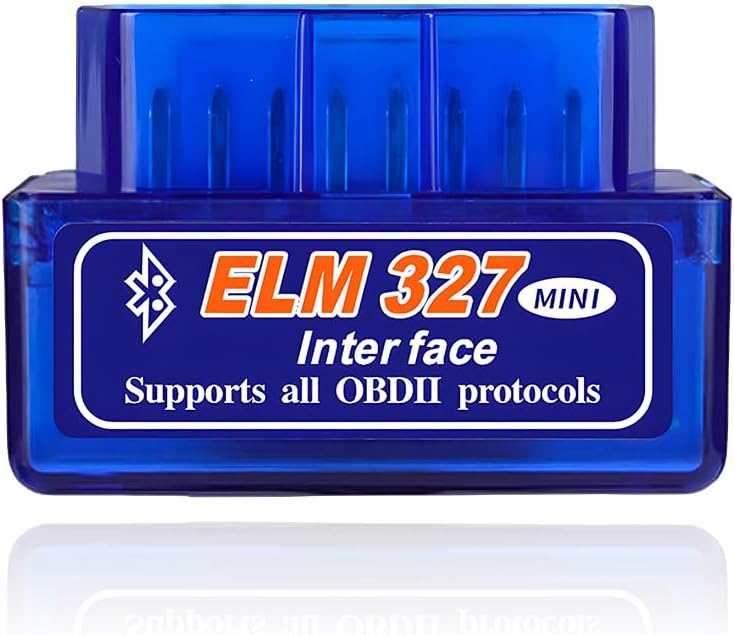
- Classic Bluetooth, PIN pairing
- Android only, not for iPhone
- Torque, Car Scanner, OBD Fusion
The thumb-sized ELM327 dongles bought most last month: the Android bestseller for Torque and Car Scanner, a v1.5 mini for apps that want the full command set, and a Bluetooth 5.1 mini your iPhone can see.
Ranked by last month's sales · rechecked September 2026
An ELM 327 mini is a plastic shell under two inches long that plugs into the OBD2 port below your dash and stays there. Inside sit an ELM327-compatible interpreter and a radio: Bluetooth on most minis, Wi-Fi on a few. There is no screen and no button, so the app on your phone does all the talking.
The port feeds it battery power on pin 16, which is why nothing ever needs charging. Your app sends OBD2 requests over the radio, the dongle puts them on whichever bus your car uses, and the replies come back as numbers on the phone. The Veepeak VP11 measures 1.89 by 0.98 by 1.26 inches and weighs just over an ounce; the Panlong B02 shares that footprint at 18 grams.
What comes back is the generic engine side of the car, the part every 1996-or-newer US car has to answer:
What stays out of reach matters just as much. Veepeak spells it out for the VP11: nothing from the ABS, SRS, TPMS, gearbox or climate modules, no oil-light reset, no injector coding. Apps built around dedicated hardware, such as BimmerCode, BimmerLink and ABRP, refuse a mini outright.
Why this dongle: The most bought ELM327 mini: Classic Bluetooth that pairs with Car Scanner and Torque on Android phones.
Choose the phone first and the mini second. The radio inside the dongle has to match what your handset lets third-party apps use, and that splits every ELM 327 mini Bluetooth or Wi-Fi model into a few clear camps.
| You connect from | Link the mini needs | Minis that fit |
|---|---|---|
| Android phone or tablet | Classic Bluetooth, or any of the others | Veepeak Mini, Panlong B02 V1.5, blue v2.1 minis, Super Mini V1.5 |
| iPhone or iPad | Bluetooth LE or Wi-Fi | ViaBecs Bluetooth 5.1, Panlong PL-B04, B02-KD, Wi-Fi mini |
| Android car stereo | Classic Bluetooth the head unit accepts | JOYING v2.1 and SYGAV head-unit minis |
| Windows laptop | Bluetooth serial or Wi-Fi | B02-KD, Wi-Fi mini, stymart blue mini |
Android is the easy case. It hands Classic Bluetooth serial to any app, so even the cheapest blue mini works with Torque, Car Scanner and OBD Fusion. Pair it in Android's Bluetooth menu with PIN 1234, then choose it as the adapter inside the app.
iPhones are the trap. iOS keeps Classic Bluetooth serial away from ordinary apps, so a Classic mini never turns up, however often you try to pair it. A Bluetooth LE mini works another way: it stays out of the iOS Bluetooth menu and the app finds it by itself. Veepeak prints NOT for iOS in the VP11's name for exactly that reason.
Wi-Fi is the older workaround. The mini runs its own hotspot, the phone joins it, and OBD Fusion or DashCommand connect to its address. While connected, the phone's Wi-Fi is busy with the dongle; the iPhone setup notes weigh both iOS routes.
Veepeak Mini |
Panlong B02 Mini V1.5 |
Blue ELM327 Mini (V2.1 Clone) |
ViaBecs Mini ELM327 Bluetooth 5.1 |
Panlong Mini BLE for iPhone |
ELM327 Mini for Android Head Units | |
| Link | Bluetooth | Bluetooth | Bluetooth | Bluetooth 5.1 | Bluetooth LE | Bluetooth |
| iPhone | No | No | — | Yes | Yes | — |
| Android | Yes | Yes | Yes | Yes | Yes | Head unit |
| Firmware | — | v1.5 | — | — | — | v2.1 |
| In the box | 1 dongle | 1 dongle | 1 dongle | 1 dongle | 1 dongle | 1 dongle |
| Open the deal | Open the deal | Open the deal | Open the deal | Open the deal | Open the deal |
Six minis side by side differ on four labels: link, firmware version, chip and pack size. Version and chip cause most of the confusion, because the numbers printed on a clone mean something different from the same numbers on a genuine ELM327.
Elm Electronics, the Canadian firm behind the original chip, has no version 1.5 in its history. That label belongs to the clone world, where it usually marks a copy of the 1.4-era command set running on a Microchip PIC18F25K80. Apps written years ago for the real chip expect those commands, so v1.5 minis stay in demand.
A v2.1 sticker on a clone rarely matches Elm's own v2.1. Many cheap v2.1 minis answer only part of the command list: a basic code read works, while an app's advanced mode or a manual protocol switch fails. The blue v2.1 mini suits Torque and simple reads; the Super Mini V1.5 names its PIC18F25K80 for apps that lean on the fuller set.
Branded minis sidestep the version game. Panlong writes fully ELM327 compliant and names nine OBD2 protocols for its B02, which also carries V1.5 in its model number. A version sticker helps you judge a generic mini, and matters less on a named one.
Two blue minis in one order, one for each car's port. The box copy gives PIN 1234 and Torque as the first app, so both pair the same way on Android.
Open the deal
Panlong's mini shell with Bluetooth LE: no manual pairing, the app finds it. Car Scanner, OBD Fusion and Dr. Prius work with it on iPhone and Android.
Open the deal
A super mini that names the PIC18F25K80, the chip v1.5 clones are built on. Classic Bluetooth for Android apps that lean on the full v1.5 command set.
Open the deal
A v2.1 mini with PIN 1234, sold for Android car stereos, so Torque can run on the dash screen instead of a phone.
Open the dealNot every driver wants the bestseller. Four setups come up again and again, and each one has a mini built around it.
The ELM327 Mini 2-Pack puts two blue minis in one order. Leave one in each port and pair both with the same app; the box copy gives PIN 1234 and suggests Torque as the first app. Both show up as OBDII, so rename them in Android's Bluetooth menu to tell them apart.
The Panlong PL-B04 is a mini shell with Bluetooth LE. It skips manual pairing: open YMOBD, tap once, and the app connects. Panlong also names Car Scanner, OBD Fusion, DashCommand and Dr. Prius among the third-party apps, and the same dongle serves an Android phone.
The Super Mini V1.5 puts the PIC18F25K80 in its name, the part most v1.5 clones are built on. Classic Bluetooth keeps it on Android. One blue variant in the family is titled No PIC18F25K while a white one says with PIC18F25K, so read the variant name before you order.
Android head units pair through their own Bluetooth stack, and not every mini gets along with it; Veepeak warns that its VP11 may not. The JOYING v2.1 mini is made for Android car stereos, with PIN 1234, a 45mA draw, a 5 to 10 metre range and a 23-gram shell. Torque then runs full-screen on the dash.
The family's other member, the SYGAV adapter, is also made for Android head units and rules out the iPhone. Before ordering either, check that your stereo runs full Android and can install Torque from its app store. A stereo built only for hands-free calls usually has no way to talk to a data dongle.
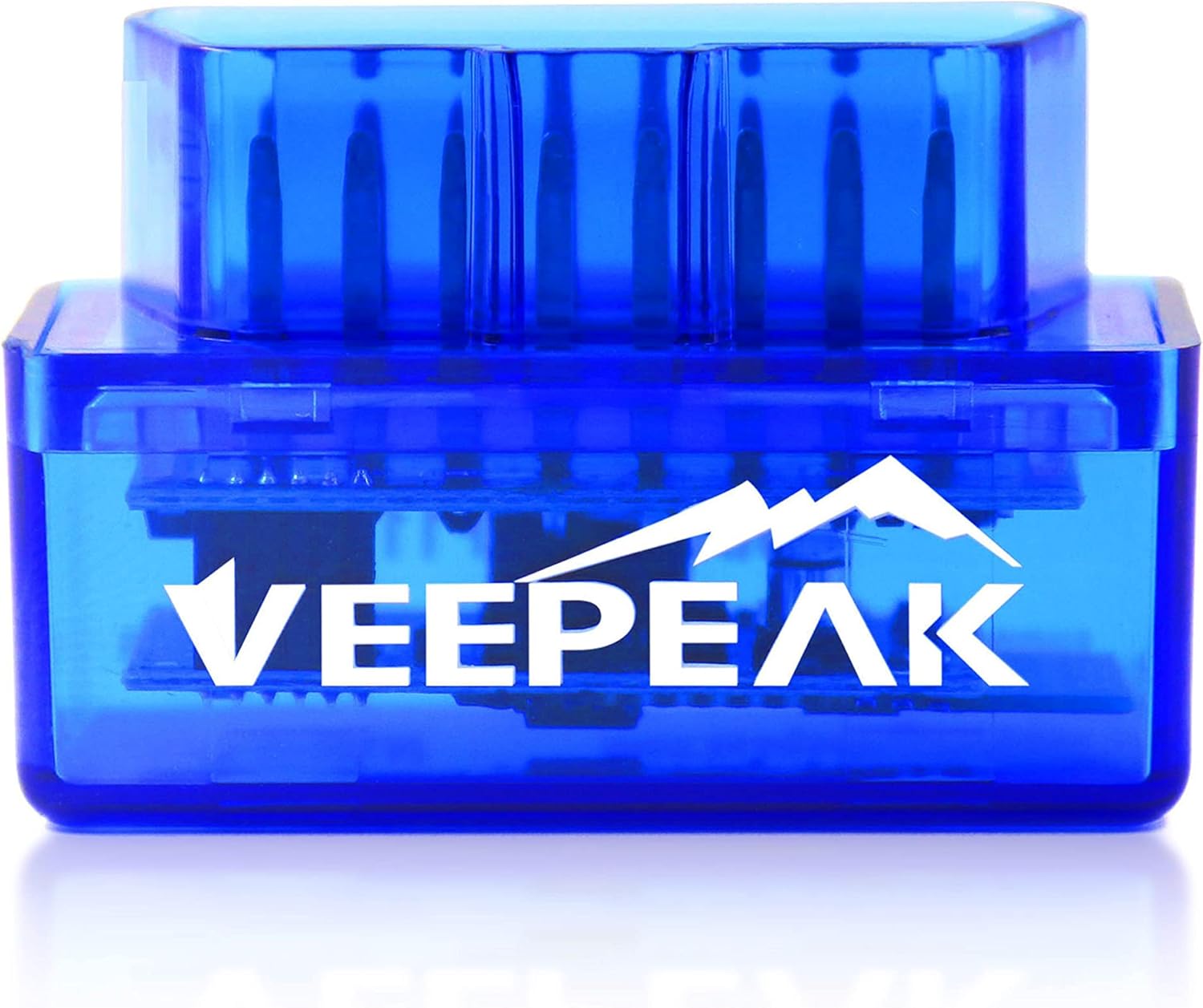
Sort the nine mini families by link and Classic Bluetooth for Android still leads. Four families are Android minis, three are iPhone-ready Bluetooth LE minis, one runs on Wi-Fi and one is built for car stereos.
The split follows history. Classic Bluetooth serial was the first cheap wireless link for OBD2, Android apps such as Torque grew up on it, and its parts cost the least. Bluetooth LE minis came later, once iPhone owners wanted in without joining a hotspot.
Each camp gives something up:
Families count designs, not names. The blue v2.1 family alone spans KVAEY, Dickno and stymart shells in singles and two-packs, and the Super Mini V1.5 family runs to more than ten near-identical variants. Counting every variant would only show how many labels one board wears.
Fuel type splits the camps too. The Panlong minis cover light diesels and the B02-KD names 12V gasoline and diesel vehicles. The Wi-Fi mini excludes diesel, and the blue v2.1 minis exclude hybrids and EVs, so a diesel or hybrid owner starts with a shorter shortlist.
Every family groups the same electronics under several names, colours and pack sizes. Open one and the real differences shrink to six checks.
Names confuse more than specs do. The blue v2.1 minis come as KVAEY, Dickno and stymart, all in the same shell with PIN 1234. The Super Mini V1.5 appears under a generic brand in blue and in white. Treat the family as the product and the brand as packaging.
Two picks stand apart from the clone families. The Veepeak Mini and the Panlong B02 V1.5 are branded Android minis with clear app lists and written support notes. That counts for a lot on the evening an app refuses to connect.
The Wi-Fi mini and the B02-KD round out the set for iPhone and Windows users, and the ViaBecs Bluetooth 5.1 is the first BLE mini to try.
Setup takes minutes once the right mini arrives. The same five steps work for Classic, BLE and Wi-Fi minis, and only the third changes with the link.
If the phone pairs but the app cannot reach the engine, push the mini deeper into the port and retry with the engine running. When a Panlong or ViaBecs mini is missing from the phone's Bluetooth list, that is normal; the app finds it. The PIN and pairing manual covers the stubborn cases.
Leaving the mini plugged in is a judgment call. The JOYING mini states a 45mA draw, roughly one amp-hour a day if the port stays live with the car off. A daily driver shrugs that off; a car parked for a fortnight may not, so pull it out before a long break.
Yes, as long as the mini talks Bluetooth LE or Wi-Fi. Classic Bluetooth minis such as the Veepeak VP11 never appear on iOS, while the ViaBecs, Panlong PL-B04 and B02-KD minis connect inside apps like YMOBD and Car Scanner.
Usually 1234. A few units use 0000 or 6789, and Bluetooth LE minis skip the PIN because the app connects to them directly.
Most US cars from 1996 on, most EU petrol cars from around 2001 and diesels from around 2004, since all of them carry the standard OBD2 port. The app decides how much of a hybrid or EV it can read, and several minis rule those out.
For older or demanding apps, v1.5, ideally on a PIC18F25K80 board, because clone v2.1 firmware often answers fewer commands. For simple code reads in Torque, a v2.1 mini does the job.
No. An ELM327 Bluetooth mini diagnostic tool reads the generic engine side: codes, live data, freeze frame and emissions readiness. Veepeak rules out ABS, SRS, TPMS and transmission modules for its VP11, and most minis stay within generic engine data too.
For a car driven daily, usually yes. The JOYING mini states a 45mA draw, about one amp-hour a day, so unplug it before the car stays parked for a week or longer.
On Android, Car Scanner or Torque Lite; both read codes and live data at no cost. On iPhone with a BLE mini, YMOBD or Car Scanner.