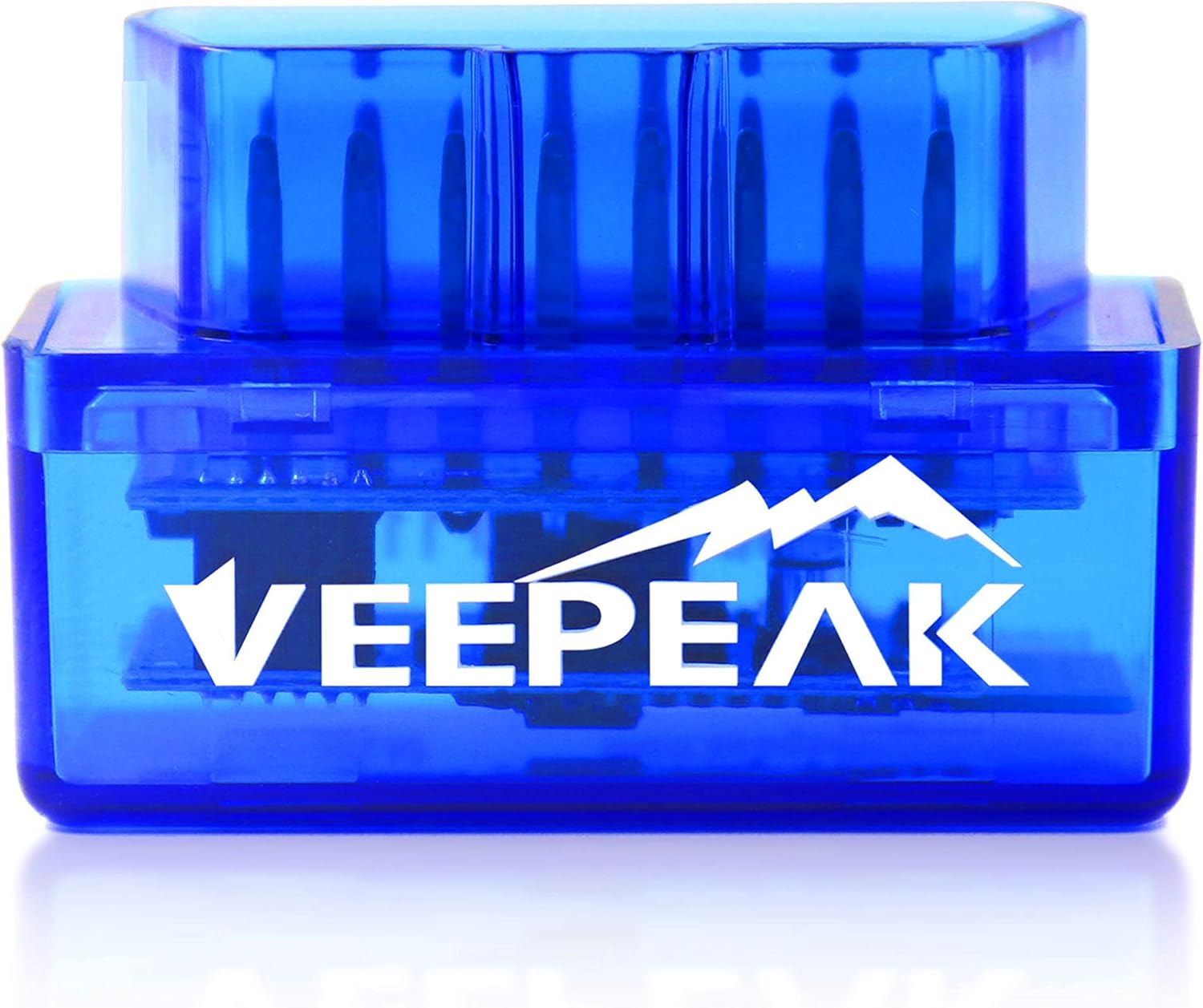
- Classic Bluetooth, PIN pairing
- Android only, not for iPhone
- Torque, Car Scanner, OBD Fusion
The classic translucent blue mini, now in black and white too: a Classic Bluetooth v2.1 clone that pairs with PIN 1234, opens in Torque, and comes in twos for households with two cars.
This is the mini most people picture when they hear ELM327: a translucent blue shell, a Classic Bluetooth radio, and a firmware report that says v2.1. The makers change, KVAEY, BWBWND, Dickno and a string of others, while the shell, the PIN and the pairing routine stay the same.
The v2.1 number needs a word of context. Elm Electronics did release a genuine v2.1 chip, but the blue minis carry clone firmware that borrows the number. Descriptions of these units list the processor simply as ELM327 V2.1, and in daily use that means solid basic reads with a thinner command set than the v1.5 clones.
What the v2.1 label means for an owner:
Pairing is the part the box copy spells out. Download Torque, push the blue connector into the diagnostic socket beneath the steering wheel, and start the car. Pair with the device called ELM327, or OBDII on some batches, and enter 1234 when asked. Then connect from inside the app.
The quoted Bluetooth range is 5 to 10 metres, plenty for a phone on the dash or a tablet on the passenger seat. It also means a phone in the kitchen will not reach a car in the driveway, so run sessions from inside the car.
| Spec | Value |
|---|---|
| Version label | ELM327 v2.1 (clone firmware) |
| Connection | Classic Bluetooth |
| Bluetooth PIN | 1234 |
| Bluetooth name | ELM327 or OBDII, depending on the batch |
| Quoted range | 5–10 m |
| Compatible devices | Android phones and tablets; Windows on some units |
| iPhone / iPad | Not supported |
| App named in the box copy | Torque |
| OBD-II protocols | J1850 PWM, J1850 VPW, ISO 9141-2, ISO 14230-4 KWP, ISO 15765-4 CAN |
| Functions | Read and clear codes, turn off the MIL, live sensor data |
| Code library | Over 3,000 generic code definitions |
| Vehicles | Most 12V OBD-II cars; hybrids and EVs excluded |
| Housing | ABS, insulated and flame retardant |
| Dimensions | 1.85 × 0.94 × 1.18 in |
| Net weight | About 31 g |
| Supply | 12 V from the OBD-II port |
| Working temperature | −40 to 65 °C |
| Colours | Blue, white, black, black and blue, white and blue |
| Packs | 1 or 2 dongles |
The app that comes up again and again with these minis is Torque. Every box copy in the family names it, and it is the one to install first. Car Scanner is the second pick, with a free tier that reads codes, readiness and live values on Android.
A KVAEY unit counts 17 functions, and descriptions of the v2.1 units list the live values in detail. The ones worth a gauge:
For codes, the dongle reads both generic and manufacturer-specific engine trouble codes and shows the meaning from a library of over 3,000 generic definitions. Clearing a code switches the check-engine lamp off; it comes back if the fault persists.
Where a v2.1 clone struggles is in the less common requests. If an app hangs on its ECU search, set the protocol to automatic, drop the number of open gauges, and reconnect. The ELM327 mini app notes list the connection setting each app wants.
The one phone these minis never reach is an iPhone. They use Classic Bluetooth, which iOS keeps closed to apps, and several of the makers state plainly that iOS is not supported.
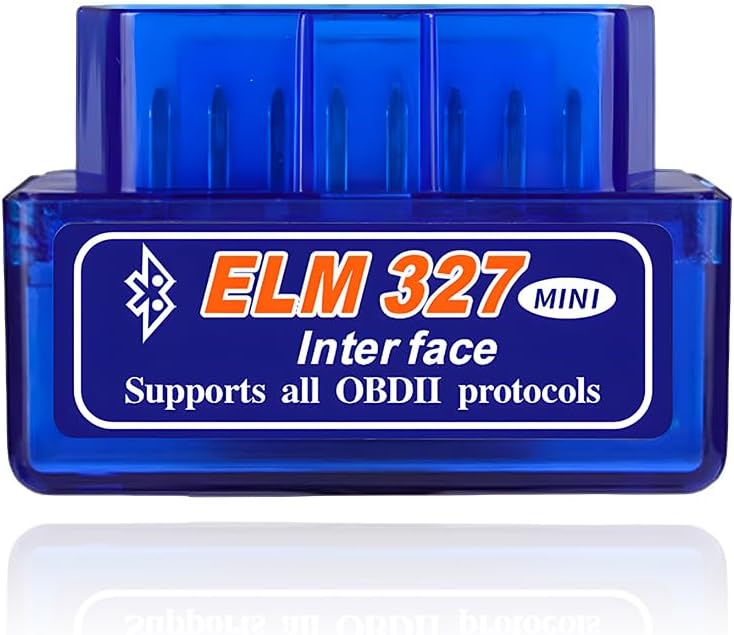
The blue mini is sold as a single and as a pair, and KVAEY alone offers five colour combinations. Inside, the dongles in a 2-pack are the same unit twice, so the pack decision comes down to how many ports you want to fill.
| Pack | Good for | Note |
|---|---|---|
| Blue single | One Android phone, one car | The classic shell |
| Black or white single | A port where blue stands out | Same firmware, different plastic |
| 2-pack | Two cars, or one spare | Leave one in each port |
| Two-tone 2-pack | Telling two cars' dongles apart | Black and blue, white and blue |
A two-tone pair has a practical use. With two identical dongles both called OBDII, the phone cannot tell which is which, and apps may connect to the wrong one. Different colours make it obvious which car a dongle came from, and renaming each in the phone's Bluetooth settings finishes the job.
Physical details that apply across the family:
KVAEY limits its units to 12V vehicles and excludes hybrids and electric cars. Older 12V petrol cars with an OBD-II port are the natural home for a blue v2.1 mini.
Leaving a dongle in each car has one cost to weigh. The port stays live with the ignition off on many cars, so a mini left plugged in draws a small current around the clock. On a daily driver that is rarely noticed, while a weekend car with a tired battery is better served by unplugging after each session or fitting the spare only when needed.
The blue v2.1 mini is the cheapest way to see what your engine computer is saying. It is not always the last dongle you buy. Three situations call for a step up, and each has a clear answer among the other minis.
None of these make the blue mini a bad buy. For an Android driver curious about a lit warning lamp, it reads the same generic codes as dongles costing several times more.
Checks before ordering a blue mini:
Because the family spans several makers, small details drift between batches: the Bluetooth name, the extras in the box, the exact shell size. The PIN, the v2.1 label and the Android-only link stay constant, and those are what decide whether it works with your phone.
It is the version number the clone firmware reports. It borrows Elm's v2.1 name but carries a thinner command set, fine for codes and live data in Torque or Car Scanner.
1234 on these units. A few clone batches elsewhere use 0000.
No. Its radio is Classic Bluetooth, and iOS blocks that link for apps. Use a Bluetooth 5.1 or Wi-Fi mini for an iPhone.
For picky apps, often yes, because v1.5 clones usually carry the fuller command set. For plain code reads and Torque gauges, the v2.1 clone is enough.
Yes. A 2-pack is two of the same unit, sometimes in two colours so you can tell the cars' dongles apart.